Multan, Pakistan15 years oldWriting code since age 10

I build AI products and ship them.

Self-taught developer. I've built an autonomous coding agent, a compliance layer for AI agents, and a multi-agent content platform, each one live on its own domain. I'm also doing flood-response ML research, all while studying FSc pre-medical.

3products live, 1 more in build
280+agent skills shipped in Codeply
113Knode national flood graph
98.71%GAT flood-detection accuracy
01PULSEStage 1: data collection and model training

A $30 bedside device that spots sepsis hours before a nurse could.

Patient monitoring Unit for Low-resource Sepsis Early warning

11Mpeople die from sepsis every year (WHO)
85%of cases happen in low-resource settings
~$30per bed, compared with $50,000+ systems
0internet, EHR or lab results needed

The problem

In a Pakistani government hospital's general ward, one nurse can have 20 to 30 patients. Vitals are checked by hand every 4 to 6 hours. Sepsis can go from "just a fever" to organ failure in 3 to 4 hours, so patients get worse in the gaps between checks, and no alarm goes off.

Every existing early-warning system is built for the ICU and costs $50,000 or more. The wards with the highest risk have nothing at all.

What PULSE is

  • Three sensors, no wires to a network. SpO₂, heart rate and temperature are read continuously at the bedside.
  • A tiny ML model on the device. A quantized model reads a rolling 6-hour window of vitals on an ESP32-S3 microcontroller, completely offline.
  • Alerts a nurse can act on. Green means stable. Yellow means recheck in 15 minutes. Red means call a doctor now, with protocol reminders on screen.

Why it matters

Every hour sepsis is caught earlier improves survival by about 7%. Equipping a whole 50-bed ward would cost about $1,500, less than a single commercial monitor. PULSE isn't a cheaper version of what exists. For most hospitals, it would be the first monitoring they've ever had.

Where it is

Stage 1 is under way: collecting data and training the first ML models. After that comes quantizing the model to fit on the chip, a hardware prototype, and a pilot at a government hospital in Multan, 10 minutes from my home.

Targets: AUROC ≥ 0.88 on just 3 vitals, about 4 hours of warning before clinical recognition, fewer than 2 false alarms per shift, and a model under 100 KB.
PythonLightGBMLSTMMIMIC-IVTinyMLESP32-S3C++
02FLOOD ACCESSIBILITY GNNIn review for publication

A graph neural network for flood response, trained on Pakistan's 2022 floods.

113Knodes in a national graph
98.71%GAT accuracy
100%recall on flooded nodes
4provinces: Sindh, Punjab, Balochistan, KPK

What I built

A graph of 113,000 nodes covering four provinces, built from 2022 flood data. It produces three things responders can use:

  • Flood detection: which areas are under water
  • Emergency routing: which routes still reach the people who need help
  • Vulnerability mapping: where the next response should go first

Technical challenges

  • Building the graph at national scale from raw geospatial data across four provinces.
  • Imbalanced classes. Flooded nodes are rare, so accuracy alone is misleading. I tuned for recall.
  • Fair benchmarking. I compared GCN, GAT, Logistic Regression and Random Forest on the same splits.
  • Generalizing across countries. I'm extending the model to Australia's 2022 floods to see if it transfers.

What I learned

Attention over neighbors (GAT) beat uniform aggregation when terrain connectivity matters. In disaster response, missing a flooded village costs far more than a false alarm, and that should decide which metric you optimize.

Results

GAT is the best model so far: 98.71% accuracy and 100% flooded-node recall. The paper is now in review for publication.

PyTorchPyTorch GeometricGATGCNscikit-learnGeospatial
01CODEPLYLive on Windows · waitlist open codeply.app ↗

A coding agent that checks its own work before it says it's done.

3products (Craft, Drop, CLI) on one account
280+built-in skills, picked automatically mid-task
400+models via OpenRouter
Win + Macbuilds shipped through GitHub Actions CI/CD
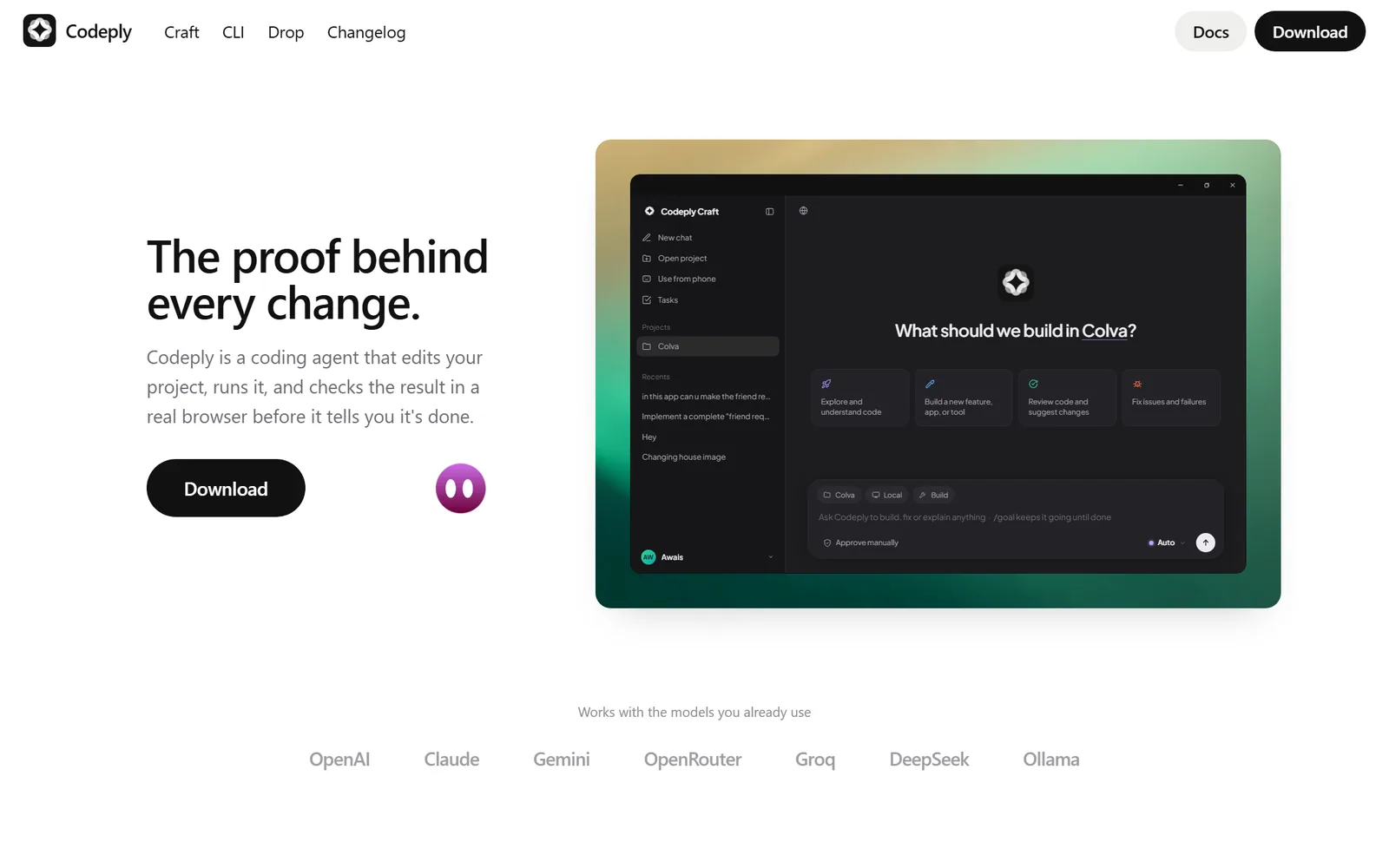
Codeply homepage with the Codeply Craft desktop app

What I built

A fully autonomous agent that reads a codebase, writes and edits files, and runs terminal commands. Then it opens the result in a real browser panel and checks console errors and network requests before it's allowed to stop. It ships as three products:

  • Codeply Craft: desktop app with chat, projects, a built-in terminal and a docked browser
  • Codeply Drop: an overlay you open with a hotkey for quick edits
  • Codeply CLI: the same agent, native to the terminal

Technical challenges

  • Stopping at the right time. Agents say "done" on broken code. I made browser verification a hard gate: the loop can't end while the page still logs errors or has failed requests.
  • Safe by default. Every write, edit and command waits for approval and shows a visible diff.
  • Choosing skills. The agent has to pick the right skill out of 280+ in the middle of a task without flooding its context.
  • Shipping the desktop app. Electron builds for Windows and Mac come out of CI. Supabase auth and a Whop paywall are shared across all three products.

What I learned

An agent is only as good as its feedback loop. Real signals like console errors and failed network calls beat screenshots and self-reports. I also learned that distribution is part of the product: install should take two minutes, not an afternoon.

Results

Live on Windows, with a waitlist for wider access. It works with OpenAI, Claude, Gemini, Groq, DeepSeek and Ollama through one interface.

ElectronTypeScriptNode.jsOpenRouterSupabaseWhopGitHub Actions
02TRACYNLaunched Sept 2026 · free beta tracyn.online ↗

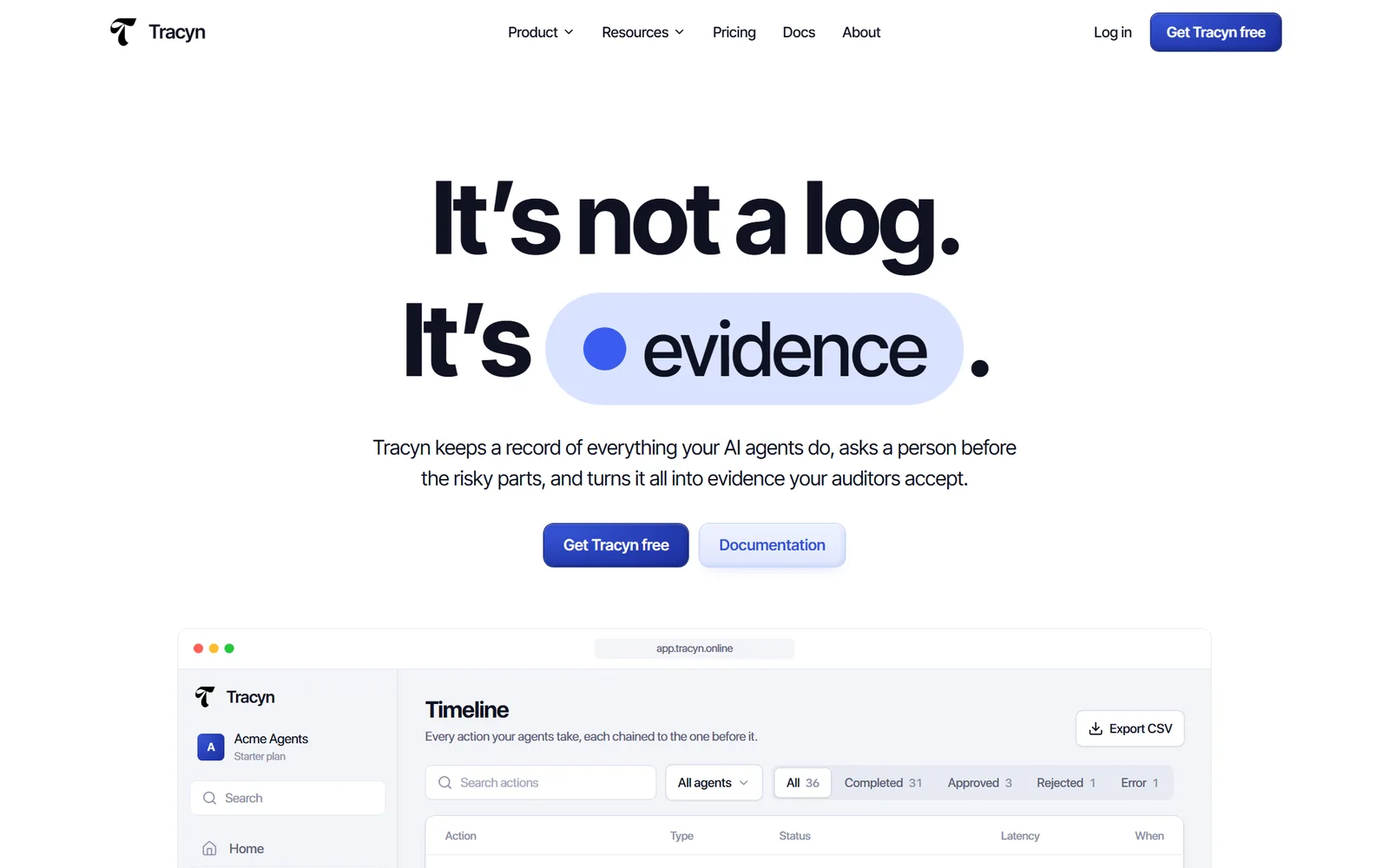
It's not a log. It's evidence. Compliance for AI agents.

1 line@audit.track above any function starts logging
SHA-256hash-chained, tamper-evident event log
~5 minfrom install to first logged action
MCPquery the trail from Claude, ChatGPT, Grok
Tracyn homepage: It's not a log. It's evidence. With the timeline dashboard

What I built

A Python SDK and dashboard that records everything an AI agent does, stops before the risky parts, and turns the record into evidence an auditor will accept.

  • Record: every agent action is logged as it happens, and each event is hash-chained to the one before it
  • Approve: plain-English policies decide which actions wait for a person, in the dashboard or in Slack
  • Prove: security-questionnaire answers are drafted from real events, with citations, and mapped to SOC 2

Technical challenges

  • Tamper evidence. Every event carries the hash of the previous one, so editing history breaks the chain and shows up.
  • Pausing an agent mid-run. A risky call has to wait for a human without losing state. If nobody approves it within 30 minutes, it's denied automatically.
  • Easy to adopt. One decorator wraps the tool calls you already have. You don't rewrite your agent.

What I learned

People who buy compliance don't want logs. They want something they can hand to an auditor. Positioning it as "evidence, not logging" changed how I framed every feature.

Results

Launched September 2026 as a free beta with a Python SDK, and the code is open on GitHub. The MCP server works with Claude, ChatGPT, Grok, Kimi and any other MCP client.

PythonMCPSHA-256 chainingSlack APISOC 2 mapping
github.com/AwaisSDev/Tracyn ↗
03FLARENIn build · early-access agencies flaren.online ↗

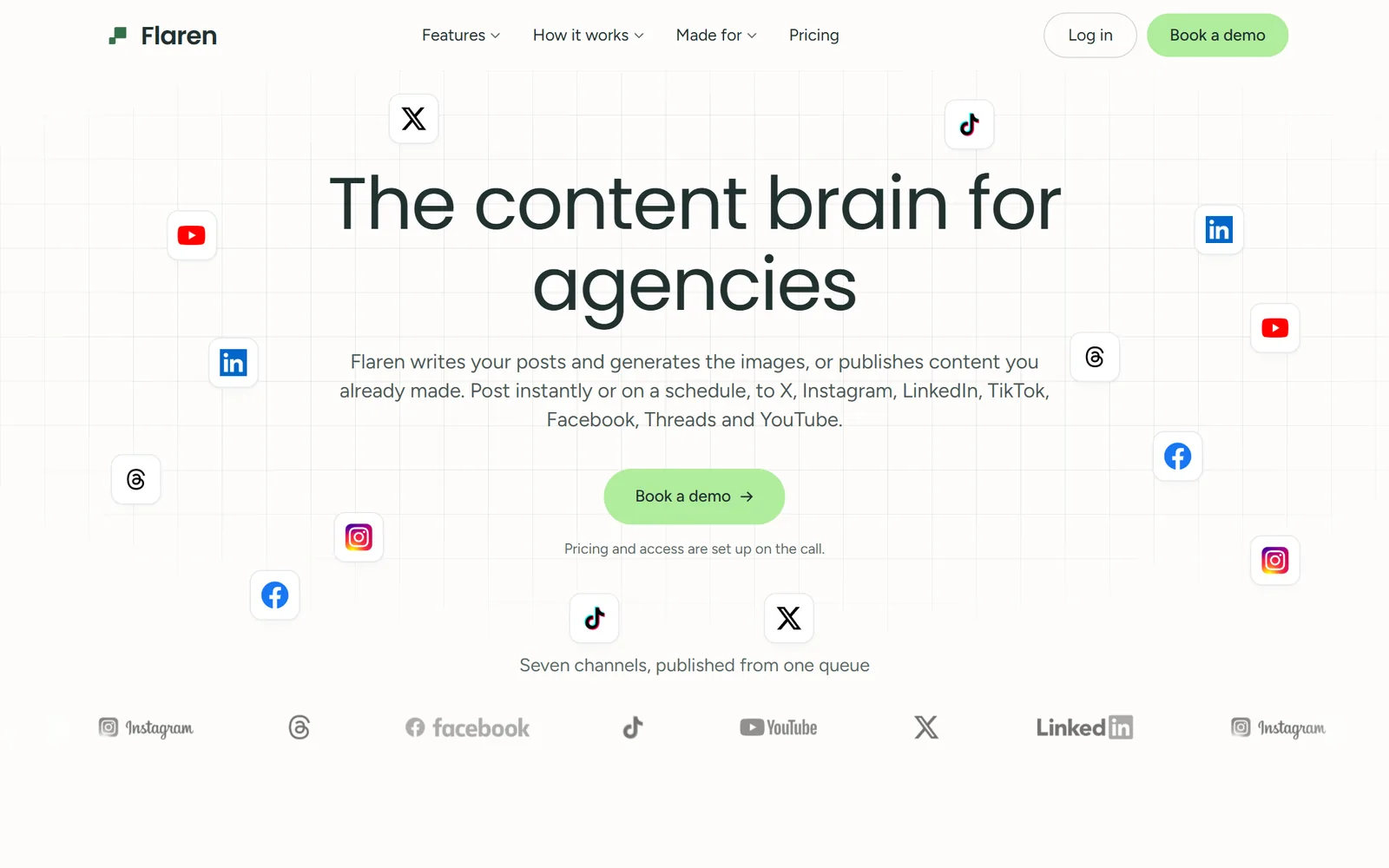
AI that researches, writes and publishes social content for agencies.

3agents: Research, Content, Video
7platforms publishing from a single queue
End-to-endMeta OAuth: Instagram, Threads, Facebook
2LLM providers: DeepSeek and Gemini
Flaren homepage: The content brain for agencies

What I built

A multi-agent SaaS where a Research agent pulls live, cited web sources, a Content agent writes in each client's trained voice, and a Video agent produces clips. Everything flows through an approval queue before it's published to X, LinkedIn, Instagram, Threads, Facebook and more.

Around the agents is the full product: client workspaces, a scheduler, Whop payments, legal docs, onboarding, dark mode and auth that syncs across domains.

Technical challenges

  • Orchestration. Long-running multi-step agent jobs fail on their own schedule. BullMQ on Redis queues each stage and retries it independently.
  • Platform integrations. Meta OAuth works end to end across Instagram, Threads and Facebook, which is the hardest part of social tooling.
  • Keeping clients separate. Each workspace has its own voice profile, connected accounts, assets and quota.

What I learned

I started with individual creator tiers, from Plus at $20 to Max at $100 a month. Talking to agencies showed me what they really needed: per-client workspaces and a hard rule that nothing goes live without sign-off. I repositioned the product around that.

Results

Still in build. Early-access agency partners in the US, the UAE and the UK are giving feedback, and sales go through booked demos.

Next.jsNode.jsBullMQRedisSupabaseMeta Graph APIDeepSeekGeminiWhop
04QUILLOWLive · free quillow.fun ↗

Studying that feels like a game. Duolingo, but for everything else.

3platforms: Android, web and desktop
5leagues, Bronze to Diamond
AIStudyGPT tutor built in
Freeno credit card required
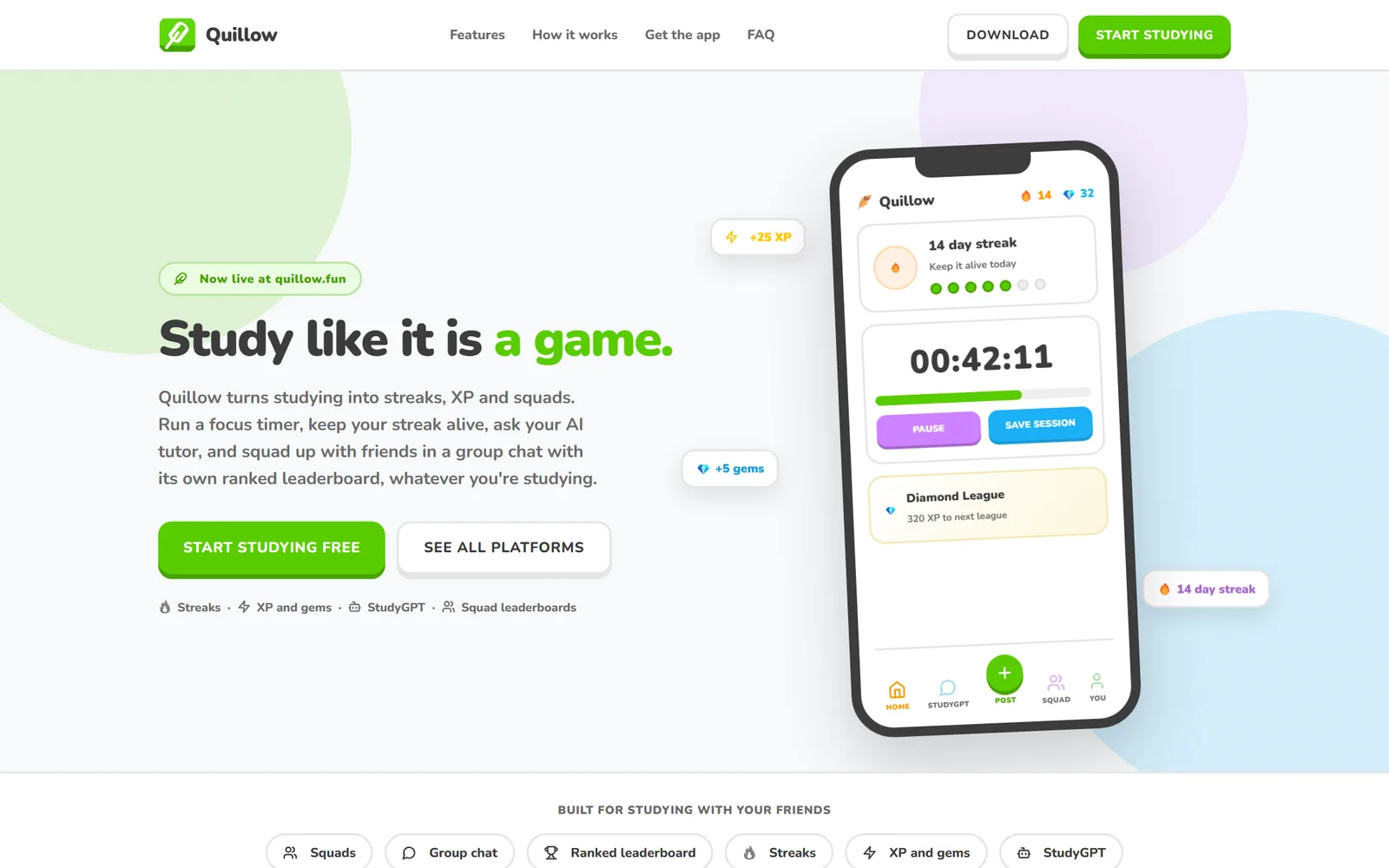
Quillow homepage: Study like it is a game, with the app's streak and timer screen

What I built

A study app that turns sessions into streaks, XP and squads. You run a focus timer, keep your streak alive, ask the AI tutor, and compete with friends on a ranked squad leaderboard with its own group chat.

Features

Daily streaksXP and gemsLeaguesSquads with chatFocus timerStudyGPT
github.com/AwaisSDev/Codeply-Craft ↗ github.com/AwaisSDev/FlarenAI ↗ github.com/AwaisSDev/Quillow ↗

Earlier tools

Where I started

ProWriteAIAI writing tool for generating content
VocabUpVocabulary browser extension backed by Google Sheets
QuickSummChrome extension that summarizes text
BulkListifyBulk importer from images to Shopify

About

Pre-med student by day. I build software the rest of the time.

I'm Awais. I'm 15, I live in Multan, Pakistan, and I started coding at 10 with no classes and no bootcamp. I learned from documentation, broken builds and shipping things.

I'm in FSc pre-medical, so I study biology while I build AI agents. That overlap is why my research goes after problems close to home: floods that displaced millions in 2022, and hospitals running without the monitoring they need.

I care about the parts of software that make it real: auth, payments, CI/CD, legal pages, onboarding. Those are what turn a demo into a product.

PythonTypeScriptJavaScriptReactNext.jsElectronNode.jsC++PyTorchSupabaseRedis
Age 10Wrote my first code
EarlyBrowser extensions and small AI tools: QuickSumm, VocabUp, ProWriteAI
2026Codeply, Quillow and Tracyn went live. Flaren is in build and the flood GNN paper is in review.
NowCodeply Mac access, Flaren with agencies, and PULSE